jueves, 30 de julio de 2015

Let her go ...

Let her go, - Passenger

Well you only ____ the light when it's burning low
Only miss the sun when it starts to snow
Only know you love her when you let her go
Only know you've been high
When you're feeling low
Only ___ the road when you're missing home
Only know you ____ her when you let her go
And you let her go


Staring at the bottom of your glass
Hoping one ___ you'll make a dream last
But dreams come slow and they go so fast


You see her when you close your eyes
Maybe one day you'll understand ___
 Everything you touch surely dies


But you only need the light when it's ____ low
Only miss the ___ when it starts to snow
Only know you love her when you let her go
Only know you've been high when you're feeling low
Only hate the road _____ you're missing home
Only know you love her when you let her go


Staring at the ceiling in the dark
Same old empty feeling in your ____
Because love comes slow and it goes so fast


Well you see her when you fall asleep
But never to touch and never to keep
Because you loved her too much
And you dived too deep


Well you only ____ the light when it's burning low
Only miss the sun when it starts to snow
Only know you love her when you let her go
Only ____ you've been high when you're feeling low
Only hate the road when you're ____ home
Only know you love her ____ you let her go
And you let her go
And you let her go
Well, you let her go


_____ you only need the light when it's burning low
Only miss the sun when it ____ to snow
Only know you love her when you let her go
Only know you've been ____ when you're feeling low
Only ____ the road when you're missing home
Only know you love her when you let her go


Because you only need the light when it's burning low
Only miss the sun when it starts to snow
Only know you love her when you let her go
Only know you've been high when you're feeling low
Only hate the road when you're missing home
Only know you love her when you let her go
And you let her go


 Activities


Exercise 1

Listen and fill in the blancks.


Exercise 2

This text is:

a) a biography

b) an academic text

c) a song


Exercise 3

Read the text again and write a comentary about it.

 
ELIANA SANTOS

domingo, 12 de julio de 2015

Benefits of having a pet at home

Much more than company

Pets are considered preventive medicine. His care and affection towards them promote health and prolong life. Numerous studies have shown, for example, that when the blood pressure cherish, and produce relaxant effects on our organism reduced. And, certainly, they are a real antidote to stress and an inexhaustible source of love and companionship.
These are some of the benefits of living with a pet.

Reduce the feeling of loneliness: his constant presence makes people feel more confident, safe and secure. His company also encourages physical contact and communication; almost all owners speak to your pet and the conversation is more relaxing because of one simple reason: the animals do not judge people.

Increase self-esteem: the care and attention demanding pets reduce leisure time, make the person feel useful and create a close relationship between human and animal, in which they exchange love and emotions. They are a constant source of motivation for its owner.

Children learn: living with pets helps children learn positive values ​​such as respect for animals and life, friendship and love, creates a sense of responsibility and fosters communication between parents and children. Pets can teach children to love. A pet develops in children the feeling of being always accepted and loved.

They improve mood: they are a source of joy and fun for the whole family, and with your company we are taught to enjoy the simple things in life.

Encourage social contact: having a pet is a good way to establish positive social contacts, meeting other people with whom to share her stories and experiences, expanding the circle of friends.

They help keep in shape: dogs need walking and exercising daily. Share with the pet and enjoy this activity makes both she and her owner stay healthy.

Promote recovery from illness: it has been shown that people who own pets recover faster from illnesses such as heart attacks and surgeries than those who do not possess.

Supporting disabled people: particularly dogs, can become the eyes, ears and legs of many people with certain disabilities.

We become more human: the care and love for animals make us show more empathy and positive attitudes towards them, and so we learn to act the same way with people.


Release of stress: studies carried out on people who own pets and others do not have, show that the first group has higher states of mind and shorter periods of depression.

SOURCE: http://www.adopta.mx/2010/05/ventajas-de-tener-una-mascota-en-casa/

              Sintesis del texto presentado
Dicho texto explicita los beneficios que aporta el hecho de tener una mascota en casa, la cual resulta ser más que una compañía.
Algunos de esos beneficios son: promueven la salud y prolongan la vida del ser humano, disminuyen el sentimiento de soledad, incrementan la autoestima,  la convivencia con las mascotas contribuye a que los niños aprendan valores positivos como: el respeto hacia los animales y la vida, la amistad y el amor; también mejoran el humor, favorecen la recuperación de las enfermedades, apoyan a personas discapacitadas, entre otros.

Activity

                        TRUE OR FALSE.  Justifies those who are falses.

1)    Coexistence of children with pets hurts their values.
2)    The care and attention demanding pets make the person feel useful.
3)    Those who own pets recover faster from different diseases.
4)    Pets not support those with disabilities.
5)    Care and love for animals made us be more human.

ESTEFANÍA PÉREZ


viernes, 10 de julio de 2015


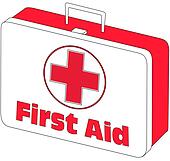
First aid is the assistance given to an injured or sick person in need of urgent medical assistance. First aid applies to a broad range of medical situations and consists both of specific knowledge and skills (for example, what to do for each type of injury or illness) and the ability to assess a situation and make appropriate decisions (such as when to call for emergency medical assistance).

Preparedness is a key element of first aid. While every home, auto, and boat should be equipped with a basic emergency kit that includes first aid supplies and a first aid manual, special circumstances may necessitate more advanced or specific degrees of preparation for an emergency. For example, residents of certain geographic areas where natural disasters (such as hurricanes, earthquakes, tornados, floods, landslides, or tsunamis) may occur should prepare for emergencies by assembling disaster preparedness kits such as earthquake kits, flood kits, andevacuation kits.

Travelers should also prepare to administer first aid in the region they plan to visit. In many developed countries, this may amount to packing a standard first aid kit and manual with your belongings. Medicines to prevent motion sickness and advanced awareness about the management of traveler's diarrhea are also helpful to travelers. In the developing world or in remote regions, a travel medicine kit should include medicines and supplies that may not be available for purchase as well as any specific products (such as insect repellant to prevent mosquito and tick bites) needed for your destination. It's also important for travelers in foreign countries to learn how to access emergency services by telephone.

Being prepared to administer effective first aid can also involve learning specific skills such as cardiopulmonary resuscitation (CPR) or abdominal thrusts to assist choking victims. First aid may be required for medical emergencies such as heart attack, stroke, or seizures as well as for minor medical conditions like nosebleed and mild allergic reactions. Environmental injuries (sunburn, poison ivy, heat exhaustion, frostbite, bee or insect stings) and traumatic injuries (strains, sprains, burns, puncture wounds, and cuts as well as more severe internal injuries) are other situations where first aid skills can be invaluable.


Regardless of your level of skill or degree of first aid training, if you find yourself in a true medical emergency, always call 911 for emergency medical assistance immediately. Likewise, if you are involved in any medical situation that is beyond your personal abilities to provide first aid, you should never hesitate to summon emergency medical assistance right away.


Síntesis del texto:
Este artículo describe lo que son los primeros auxilios y los define como la asistencia presentada a una persona lesionada o enferma. Se recomienda ante todos los casos llamar a la emergencia médica.
Tanto en un hogar, un auto, o barco, los mismos deben contar con un kit de emergencia y un manual de primeros auxilios. De acuerdo a las circunstancias de ciertas zonas es necesario contar con un kit de primeros auxilios más especializado, por ejemplo en lugares donde pueden ocurrir terremotos, inundaciones,etc. 
Se resalta la importancia de conocer y saber actuar con estos primeros auxilios, dado que nos podemos enfrentar a diferentes situaciones de las cuales muchas podemos revertir. De todas maneras lo mas importante es llamar siempre al 911, puesto que uno no siempre está preparado para ayudar ante una situación x, además ellos son los especializados. 


Activity:


1)-  It is important to know what are first aid? Why?
2)- Which accessories are essential in a first aid kit? 

Gloves     Gauze
 
Cutlery    Scissors
FeatherThermometer               Hat

Mariana Liwchitz

jueves, 9 de julio de 2015

Learning disability in children

     A learning disability is defined as a mental disorder which makes a person incapable of processing and storing the information that he receives. It may be a disorder existing by birth or may develop in the growing age. At first may be the parents are not able to recognize the existence of this problem in their child as every child takes time to learn new things. But as soon as they realize it, it is their duty to provide the required help to their children.


     Learning disabilities of a child can be major or mild. In some cases, these are found to exist due to hereditary, i.e. if anyone from the parents and grandparents is affected by it, the chances of children developing this problem are high. Learning disabilities are permanent and they cannot go with time however with advanced learning techniques, such children can be helped by many associations which provide services for learning disability NJ. Sometimes these children are smarter than the other children of their age but due to certain difficulties like listening, reading, writing and spelling, they are slow at following what is taught to them.

     Many people have certain misconceptions about the disabled children that they have a low IQ and are lazy. Due to this thinking and a different attitude of people towards such disabled children, they tend to have a low self esteem which is a major concern to deal with. There is no scientific reason to support these wrong ideas of people. Some people are not able to process what they see or hear while others are not able to remember that. It doesn’t mean that they are physically disabled too. Such people are more hard- working as compared to others but their disability limits their performance.

     All that these people require is special attention and a little bit of assistance. There are many learning disability NJ schools and associations specially opened for such children to assist them with learning and providing them certain types of help to show their abilities. The parents of such a child need to pay special attention to their children and acknowledge the other qualities that they possess. They need to bring out their positive points and motivate them to prove themselves. As a parent, it is their responsibility to make the child feel comfortable and encouraged to do the things he is good at.

     There are many orientation programs are counseling sessions available for the children as well as their parents which can demonstrate the ways by which these children can be taught. No one wishes his child to have a learning disability, however, if one occurs, a positive approach is very important to be followed by the parents as well as the children. It is essential to recognize the truth about the child and accept it in a positive way to help him enhance his abilities and reduce his disabilities. A learning disability association will be a good place for the disabled child to give him exposure to the outside world. The people involved in these helping groups are good at knowing the psychology of these children and are aware of the kind of help they require.


Vanina Padilla


lunes, 6 de julio de 2015

ANNE FRANK: LESSONS IN HUMAN RIGHTS AND DIGNITIY
The human costs of war By JOYCE APSEL


". . . Recognition of the inherent dignity and of the equal and inalienable rights of all members of the human family is the foundation of freedom, justice and peace in the world."

— preamble, Declaration of Human Rights, 1948

The 20th century has been one of remarkable achievements and human progress. But the 20th century is also one of repeated genocide (from genus, which means "people," and cide, which means "killing"; that is, the intentional killing of innocent people belonging to a targeted group) and war. Over and over again under the cover of war, planned killing of civilians, of one group by another, has taken place.

From 1914 to 1917, World War I, and from 1939 to 1945, World War II, the ideas and tools of the modern era were harnessed for destruction, not construction. Woodrow Wilson, president of the United States, called World War I the "war to end all wars." In the Great War, more than 8.5-million people died in battle. There were millions of civilian deaths in addition to the state-sanctioned genocide of more than 1-million Armenian people by the Turkish government.

Two decades later, Adolf Hitler, in planning the elimination of people that resulted in the Holocaust (from the Greek term for "total burnt offering"), the destruction of 6-million Jews and 5-million Gypsies, Poles, homosexuals, mentally and physically disabled people and other non-combatants, remarked, "Who today speaks of the Armenians?"
Since 1945, genocides have taken place in many regions, including Cambodia, Guatemala, Rwanda and the former Yugoslavia. How can the 21st century realize the much-talked-about global economy and civil society unless war, genocide and conflict stop?

Part of this Newspaper in Education series will look at ways to understand ourselves, analyze prejudice and deal with conflict. As individuals, there are positive ways to talk about who we are, accept our differences and emphasize our bonds as human beings. It is essential to understand our own history and laws and how they affect us. We need to think about creating a thriving environment where freedom, equality, economic opportunity and justice are part of our daily vocabulary and lives.


Dr. Joyce Apsel is director of education at the Anne Frank Center USA in New York. Please address questions or comments about this series to: Floridian, Anne Frank and Human Rights, P.O. Box 1121, St. Petersburg, FL 33731, or e-mail Floridian@sptimes.com.
YANINA NAVARRO 

Cómo percibe el mundo el autismo...


sábado, 4 de julio de 2015

Bullying prevention

Best Practices for Teachers:

Teachers play an important role in the prevention of bullying behavior and in the amelioration of its impact on victims. Teachers are also positioned to help parents understand how bullying can best be addressed. Of course, any individual teacher will be most effective in addressing bullying if he or she has the support of the administration and works in a district with a coherent policy about bullying. This document offers suggestions for prevention and intervention strategies that can be used by schools as well as by individual educators as they strive to create a positive environment for all students.

 Addressing Misconceptions about Bullying

One way that teachers can prevent bullying is by being clear to parents and community members about the best way to deal with bullying. Many people hold mistaken assumptions about bullying that can lead to ineffective intervention strategies.

Misconception: The main cause of bullying is that some kids are just aggressive by nature. Like all forms of aggression, bullying can occur for a number of reasons, including to gain material reward, to get approval from peers, or to express emotional pain. What is common to all bullying, however, is that it takes place in a situation in which the bully sees aggression as a way to get what he or she wants. If the situation does not allow bullying to be a means to those ends, then bullying is much less likely. For example, when students are taught to speak out against bullying, potential bullies quickly learn that they will not gain the approval they seek through this course of action, and will seek it through other behavior.

Misconception: Victims of bullying bring it on themselves, by being weak.While teachers are unlikely to endorse this notion, parents of children who are bullying others may believe it to be true, as a way of justifying their children’s behavior. Certainly no child deserves to be bullied, nor do children cause others to bully them. There are some characteristics that victims of bullying share, such as social withdrawal, but these similarities are much more likely to be the result of bullying than the cause.


Misconception: Bullying isn’t a big deal.. Bullying can cause serious damage. Victims experience loneliness, low self-esteem, and depression. In extreme cases, victims may be at heightened risk of suicide. Other effects include school avoidance and risk of dropping out, as well as lower levels of academic achievement and school engagement. Peer victimization is a stressor on an individual’s emotional and cognitive resources, which interferes with the ability to adapt to and engage in challenges at school.


Misconception: Bullying isn’t that common at my school. . It is easy for bullying to escape notice, especially because victims often do not report being bullied. Indirect forms of aggression such as cyberbullying make it harder to recognize when someone is being victimized. In addition, bullies may choose to conduct physical and verbal attacks in “hot spots” in the school, chosen specifically because supervision is minimal.

Misconception: Bullying is a normal part of growing up. Parents of children who bully may claim that bullying is normal behavior, or even that it is a beneficial part of growing up (for instance, by teaching children to be “tough”). In some cases it may be claimed that physical aggression is an important part of masculine identity, or that relational aggression is intrinsic to feminine identity. None of these statements are true; neither boys nor girls require the experience of victimizing others in order to develop into functional adults. However, downplaying victimization by referring to it as an expected part of life increases the negative impact on the victims, who often struggle with questions about whether they deserved to be aggressed against.


Misconception: The best way to deal with bullying is to punish the bully. Bullying does not happen in isolation, and cannot be successfully addressed only by looking at a bully and a victim. The best way to deal with bullying is by creating a climate of inclusion, and by building children’s social skills, so that bullying is no longer a useful strategy to achieve goals. While it is important to address bullying directly when it occurs, and to have clear expectations of the consequences for the behavior, harsh punishment may only drive bullying behavior underground. It does not teach appropriate behaviors that can replace the antisocial actions.

Importance of the Teacher’s Response.


When dealing with a child who has been bullied, the teacher’s reaction is a crucial signal to the child about whether he or she deserved to be victimized. A teacher who listens with empathy, conveys to the child that he or she did not cause someone else’s behavior, and follows up to gain a clear understanding of the situation sends an important signal of support. Such support can significantly reduce the negative psychological effects that a victim experiences after an attack. Teachers can do a great deal to help prevent bullying in their daily classroom interactions with relatively small, but deliberate, actions. Where teachers foster a sense of closeness with students, victims are more likely to disclose bullying incidents and experience less intense negative emotions. In addition, students who feel connected to their school environments are less likely to bully others. A teacher who creates a positive social climate for students by teaching and modeling skills in negotiation and conflict resolution, discouraging cliques and ostracism, and fostering respectful interaction among class members is creating the optimal climate for reduced risk of bullying. Where students have a strong sense of identity as a member of the school community and are encouraged to speak up to defend those who are different or alone, bullying is much less frequent.

Creating a Civil Environment.

Well-enforced antibullying rules and peer-reporting systems, as well as programs designed to support students dealing with bullying or victimization, are valuable tools for schools, and can be considered the first layer of bullying prevention. However, such policies often focus on what not to do, and as such are a suppression strategy rather than an intervention to promote prosocial behavior. In addition to having a set of clear policies in place, a school will see beneficial effects when it allows students to engage in discussions about the consequences of bullying. As part of these discussions, there are four specific steps that teachers can ask students to take:

Sign up. Teachers can ask students to make a pledge that they will refrain from bullying others. This step may seem too simple to be effective, and indeed it is not the case that signing a no-bullying pledge will cause all bullying to stop. However, research shows that a public commitment to a specific behavioral change increases compliance with the new behavior, and making a communal pledge also reinforces the idea of a shared identity that is important to a civil school climate.

Stand up. The role of bystanders in a bullying situation is powerful, yet frequently overlooked. A student who speaks out, even saying something relatively mild such as “That’s not funny” or “Leave her alone,” conveys a sense of social disapproval to a bully that can break off an attack. It also signals to the victim that he or she is not alone, and that others recognize that what is happening is wrong. Such support can be a powerful aid to the victim.


Speak up. Teachers can instruct children to report any bullying they witness twice, once to a staff member and once to their parents or other adults outside the school. Victims of bullying often do not report what is happening, limiting the opportunities for adults to provide assistance. By reminding children to speak up twice, there is more opportunity for adults to notice patterns and to intervene. Teachers can also take the opportunity to praise the child who speaks up for his or her role in stopping negative behavior. Children and adolescents often falsely believe that they are the only ones bothered by what they witness, and may therefore find it difficult to speak up in the victim’s defense. Allowing children and teens to talk about the harm caused by bullying, and to mentally rehearse speaking out, may serve to change their assumptions about what “everybody else” believes. Praising a child who shows the courage to speak up in defense of someone else increases the likelihood that that child, as well as others who observe the praise, will speak up in the future.


Open up. A culture of social exclusion within a school is a major risk factor for bullying. When students believe they are permitted, or even tacitly encouraged by community norms, to ostracize those who are different from themselves, bullying increases. Under these circumstances, bullies find it easier to think of victims as less than human, or as deserving to be humiliated. Teachers can encourage students to develop empathy and understanding for people of different backgrounds, appearances, abilities, and beliefs. More than that, teachers can encourage students to take small steps to include others in their daily activities. Teacher praise is a powerful reward for students, especially in the younger grades. So when teachers praise a student who reaches out to someone who is on the margins of the classroom’s social world, that teacher is helping all students to build a social climate that is safe, nurturing, and supportive of learning.

Comentario del texto: 


El presente texto trata sobre el Bullying, considero que es importante aprender sobre esta temática ya que es muy frecuente en las escuelas actuales.
El articulo comienza describiendo las ideas erróneas que se presentan frente a esta temática en la comunidad ya que esto fomenta estrategias ineficaces contra la problemática.
Algunas de las ideas erróneas presentes son:
-La principal causa del bullying es que algunos niños son simplemente agresivos por naturaleza.
- Son victimas aquellos que son débiles, por lo tanto, ellos mismos por su propia debilidad hacen que se de el bullying.
- El bullying no es un gran problema.
- Negar la presencia del bullying como una problemática de nuestra escuela.
- El bullying es una parte normal del crecimiento.
- La mejor forma de resolver el bullying es castigando al agresor.

Luego se pasa a describir las acciones del docente frente a dicha problemática.
Se plantea como importante la reacción del docente cuando conoce de una situación de bullying. Es imprescindible escuchar con empatía y promover que el educando victimizado entienda que no merecía ser intimidado, es decir, que su conducta no causó las agresiones a las que fue sometido.
A diario, en las clases se debe fomentar un ambiente que fomente la cercanía con los educandos con el docente ya que esto promueve que en casos de intimidación el educador se entere. A su vez, es menos probable que sucedan casos de bullying cuando los estudiantes se sienten conectados a su ambiente escolar.
Es importante desarrollar un sentido de identidad, generar habilidades de negociación y resolución de conflictos.
Entonces, se considera valiosa una etapa de prevención del bullying pero también es importante promover una conducta pro social.
Por ejemplo, es favorable la participación de los educandos en discusiones acerca de las consecuencias del bullying.
Para ello se plantean 4 pasos:
- El primer paso es una promesa en la que se pretende abstenerse de intimidar a los otros, es decir, un compromiso público en el que se expresa la adopción de una nueva conducta.
- Es importante el rol de las personas frente a una situación de bullying. Se considera beneficioso generar una sensación de rechazo frente a la situación negativa y de contención a la víctima.
- Es imprescindible enseñar a los niños que deben hablar frente a situaciones de bullying tanto a sus maestros como padres. Dar a conocer que no son los únicos a quienes les sucede dichas situaciones y promover que los otros estudiantes ( que no sean víctimas) también hablen sobre situaciones de bullying que conocen y tal vez el docente no se ha dado cuenta.
- Por ultimo, una cultura de exclusión social dentro de la escuela es uno de los principales factores que propician la aparición del bullying. Por eso es importante que los docentes fomenten el desarrollo de la empatía y el entendimiento de que todos somos diferentes. Tenemos diferentes apariencias, habilidades y creencias. También se debe favorecer la integración de los educandos en las actividades diarias.

Para finalizar, es considerado primordial la valoración positiva de los docentes hacia los educandos cuando estos promueven la integración y desarrollan habilidades de empatía construyendo un clima social seguro.


Estudiante: Romina Hernández

jueves, 2 de julio de 2015


Comentario:
El texto hace referencia al monumento denominado The Big Ben, ubicado en Londres.El nombre que recibe no hace referencia a la torre en la cual se sitúa sino a la gran campana que se encuentra dentro de dicha torre. Las características de esta campana son: su peso de aproximadamente 13. 700 kg, su altura de 2,2 m y fundamentalmente el sonido que emite a cada hora y cada víspera de un  nuevo año .El nombre que recibe la torre en la cual se encuentra The Big Ben es Elisabeth Tower.Cada vez que una persona visita Londres,no debe olvidar disfrutar del panorama que ofrece  este monumento.


Questions:
1-What is the capital of the United kingdom?
2-Which is the name of the tower?

True or False 
1-The tower measures 2,2 m tall.
2- The Big Ben is the small bell inside in the tower.


By Traicy Plácido